
Dynamic Dung: Peru’s Guano Birds and the British Empire
Lesley Kinsley, Ph.D. Candidate, University of Bristol
Peruvian guano or seabird excrement is probably the most effective naturally occurring nitrate and phosphate rich fertiliser in the world. The guano birds, which produce unusually large amounts of excrement on Peru’s dry coastal islands and headlands, have been an integral part of ethnic culture and mythology and a valuable resource to human beings there, probably for millennia.
Although guano occurs across the planet, Peru’s guano birds generate high quality guano that, for nitrate content, cannot be matched anywhere else in the world.
.

Early coastal native peoples in what is now Peru saw themselves as ‘bird peoples’ and viewed the birds as their ancient kin. They carefully managed them for their highly prized excrement. During Inca colonisation, their leaders recognised the value of guano, as demonstrated by the bird peoples. Incas carefully rationed guano and applied a death sentence to those who disturbed nests or slaughtered guano birds.
The inscription on the tablet in Figure 2 reads “Don Pedro guanneque prinsipal del valle de (c)hincha” indicating that Don Pedro was an indigenous guano lord protecting his ethnic kin, and a baptised Christian of high social standing. This reflects how coastal indigenous peoples, opposed to Inca mountain rule, co-operated with the Spanish colonisers and continued to manage the birds and their guano.

A British opportunity leading to the Guano Age

.
.
.
Towards the end of his five years of travel (1799 to 1804) in Central and South America, scientific explorer Alexander von Humboldt observed the use and trading of guano in Peru. He sent samples back to Europe for analysis in 1804, thus reawakening a European interest in its use as a fertiliser. This was not to be realised for nearly forty years due to the struggles for independence from Spain, followed by years of internal political instability.
Peruvian government officials were thirsty for funds to expand their military and civil bureaucracy and British agriculture was hungry for nutrients to feed a growing population. Peruvian guano provided a profitable solution for both countries. There were still millions of guano birds and vast reserves of fossilised and fresh guano reserves, viewed by the British as ‘there for the taking’.
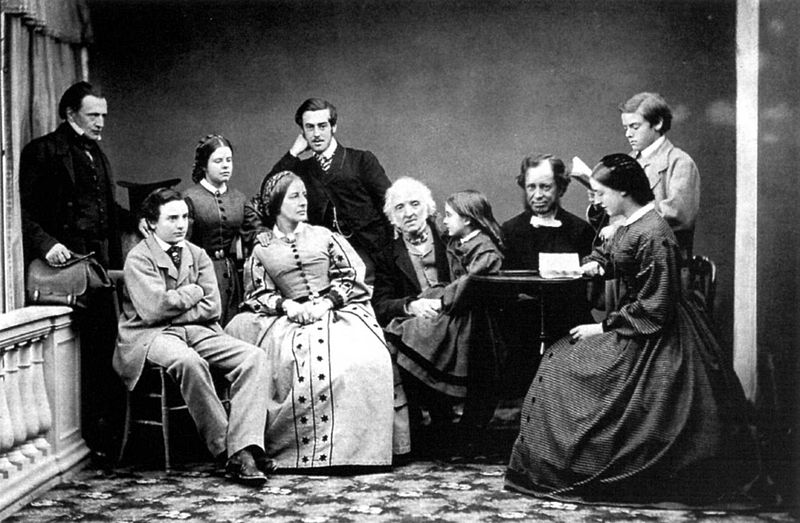
With their London connections and their potential to obtain loans for Peru on international financial markets, Antony Gibbs and Sons entered into the Peruvian guano trade in 1842 and monopolised the global trade for its peak production years from 1847 to 1861. William Gibbs, son of Antony and the company ‘Prior’, became the richest commoner in England through his guano profits, used to transform his country house of Tyntesfield in North Somerset into a notable example of Victorian high gothic architecture. ‘Mr Gibbs made his dibs selling the turds of foreign birds’ was a nineteenth-century London jingle, attributed by some to the English poet Tennyson.


The trade continued and the period of peak trade from 1840 to 1880 became known as the Guano Age, during which time Peru was the most important country supplying agricultural fertiliser to Europe and North America.
Millions of tons of guano were hand dug, loaded onto hundreds of ships for export, and involved the harsh exploitation of indentured Chinese and Polynesian labourers.
A. J. Duffield wrote in Peru in the Guano Age (1877); ‘when I first saw them (guano islands) twenty years ago, as once tall and erect like living things …..now they looked like creatures whose heads had been cut off…..that reminds one of death and the grave.’ Such intensive extraction, over only a few decades, ruined the habitat of the guano birds. Easily driven away or slaughtered, their numbers were drastically reduced along with the amount of guano produced.
This exploitation by the British and other core nations left the Peruvians in debt and resource poor: a lost economic opportunity for Peru. Britain could now be said to be in environmental overdraft at home after drawing on natural resources from abroad.
Humans depend on functioning ecosystems to sustain themselves. Described by Marx as a necessary ‘metabolic interaction’ between humans and the earth; human actions mediate, regulate and control the metabolism between themselves and nature. The nutrient cycle can be viewed as having its own metabolism, which operates both independently and in relation to human society, allowing regeneration and continuance. However, the new colonialism of the Guano Age broke this cycle for human populations and guano birds in Peru, intensifying inequalities and creating what Marx described as a huge ‘metabolic rift’. Distant Peru and its ecosystem had been annexed to feed the growth of Europe and North America.

Why is Peruvian guano so exceptional?
Peruvian guano birds are extraordinary in their location and behaviour. Off the very arid Peruvian coast there is strong, cold upwelling in the ocean, which brings up deep-sea nutrients. This attracts huge shoals of fish such as anchoveta, which attract guano birds and fishing fleets (for human consumption and fish meal). Peruvian cormorants, boobies and pelicans produce most of this unique guano.
Fig. 8b Guanay chicks defaecate outside the nest, producing guano rings, which glow white in sunlight and silver in moonlight.
Fig. 8c A pair of Peruvian booby birds nestle in the rocky landscape. Peruvian boobies are the second-most important species of guano-producing bird.
Fig. 8d The Peruvian Pelican is found on the west coast of South America. It is considered a “near threatened” species on the IUCN (International Union for Conservation of Nature) list.
.
Reflections on the impact of the Guano Age and the future for the birds in the twenty first century.
The arid coast of Peru appears impoverished, yet the huge shoals of fish in the nutrient rich coastal waters attract guano birds that then excrete high levels of nutrients. This richness of the sea had sustained generations of Peru’s early peoples in an otherwise hostile landscape.
Agricultural science became increasingly influential during the Guano Age and guano studies were widely published both during and after this period. This increased its popularity with and use by British farmers, but the trade, while boosting British agriculture, had a catastrophic effect on Peru and its guano birds. As guano reserves were depleted, the continuing demand for nitrate as a fertiliser remained so high that nitrate mining in South America was then intensified. Artificial fertiliser development followed. Wars were fought over guano, and an increasing interest in nitrates went on to facilitate the development of weapons.
An understanding that living colonies of birds were needed to produce this most valuable fertiliser re-emerged in the early twentieth century. The Peruvian government exerted stringent controls over the islands from the early to mid-twentieth century, maintaining balance between birds and industry, controlling their habitat and predator-competitor numbers. This impacted on human activities, particularly fishing. Although severe and sometimes unpopular, this cutting edge approach made an important contribution to the emergence of government environmental regulation in the twentieth century. Guano exploitation continues today with stable but substantially reduced populations of the main guano bird species. Extinctions remain a risk, not least from the impacts of global warming, the fishmeal industry and changes in the ocean-atmosphere phenomena of periodic warm El Niño and cold La Niña phases in the Pacific.

Today, due to human created imbalances in the carbon cycle, high carbon costs of artificial fertilisers and a need for greater ‘carbon accounting’, guano is now sought after as an organic fertiliser and, in the words of Gregory Cushman in Guano and the Opening of the Pacific World (2013); ‘soon, the Peruvian organic quinoa and asparagus imported by your supermarket may contain nitrogen that passed through the gut of a guano bird.’
Will these birds, oblivious to their pivotal role in global history, once again be nurtured by humans or will agribusiness, in controlling the flow of guano’s nutrients to European and North American stomachs via our supermarkets, widen the ‘metabolic rift’ through the growth of corporate colonialism?
.
Books and pamphlets
Antony Gibbs and Sons, Guano its analysis and effects; illustrated by the latest experiments, (London, 1843)
Antony Gibbs and Sons, Wm. Jos Myers and Co., Peruvian and Bolivian Guano, its native properties and results, (London, 1844)
Antony Gibbs & Sons Limited,Merchants and Bankers: A brief record of Antony Gibbs & Sons and its Associated Houses’ business during 150 years, 1808-1958, (London, Millbank Press, 1958),
A.J. Duffield, Peru in the Guano Age. (London: Richard Bentley and Son, 1877)
David J. Hogg, Diaries of Tyntesfield, (Croyden, David J. Hogg, CPI, 2009)
Gregory T. Cushman, Guano and the Opening of the Pacific World,’ (New York, Cambridge University Press, 2013)
Paul Gootenberg, Between Silver and Guano: Commercial Policy and the State in Peru, (Princeton, Princeton University Press, 1989)
W.M.Mathew, The House of Gibbs and the Peruvian guano Monopoly, (London, Royal Historical Society, 1981)
Journal articles
Brett Clark and John Bellamy Foster, ‘Ecological Imperialism and the Global Metabolic Rift: Unequal Exchange and the Guano/Nitrates Trade,’ International Journal of Comparative Sociology, Vol 50, (3–4,) (2009), pp.311–334
Edward D. Melillo, ‘The First Green Revolution: Debt Peonage and the Making of the Nitrogen Fertilizer Trade, 1840–1930’. The American Historical Review (2012) 117(4): 1028-1060
George E. Hutchinson, ‘Survey of Existing Knowledge of Biogeochemistry: 3. The Biogeochemistry of Vertebrate Excretion’, Bulletin of the American Museum of Natural History, Volume 96 (1950)

Lesley Kinsley, “Dynamic Dung: Peru’s Guano Birds and the British Empire”
A retired teacher, lecturer and strategic manager, with a background in geography and environmental science, Lesley Kinsley enrolled for a PhD in History at the University of Bristol in 2012. She is currently upgrading from MLitt to PhD with a thesis title of: ‘The Guano Moment: a socio-environmental perspective on changes in mid-nineteenth century British agriculture and attitudes to excrement’. Her research begins in South America with the neo-colonial exploitation of Peruvian guano by the British, particularly the Gibbs family, who owned the monopoly for almost twenty years, and ends at Tyntesfield, the country estate of William Gibbs. He and his son substantially modified the estate using their guano trade profits.
Lesley Kinsley, ‘Tyntesfield and the Guano Trade: a landscape perspective and brief overview’, Avon GardensTrust Journal, 7 (2013), 12-19.
Please also visit:
The Tyntesfield website:
http://www.nationaltrust.org.uk/tyntesfield/
London Metropolitan Archives (LMA) hold company records for Antony Gibbs and Son’s:
.
.